Fotona Laser Research & Clinical Evidence

Published clinical data, treatment outcome documentation, and technology white papers supporting our laser platforms.

Evidence-Based Practice

Clinical Research Foundation

Every Fotona treatment protocol originates from controlled clinical investigation. Our research partnerships with university hospitals and independent clinical sites generate the evidence that defines our parameter libraries.

Since 1964, Fotona-affiliated researchers have contributed to over 200 peer-reviewed publications across dermatology, oral surgery, gynecology, and ENT disciplines. This body of work underpins the clinical claims associated with each of our laser platforms.

200+
Peer-Reviewed Papers
45+
Clinical Partners
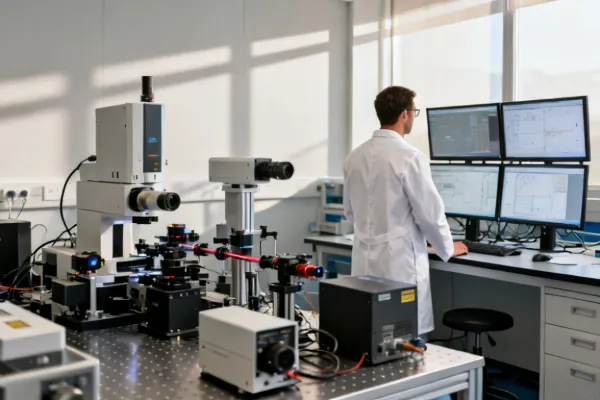
Fotona laser clinical research laboratory
Research Domains

Active Investigation Areas

Current Fotona-supported research spans four primary clinical domains, each with dedicated protocol development and outcome tracking.

Aesthetic Dermatology

Er:YAG + Nd:YAG

Ongoing multi-center studies evaluating the 4D treatment protocol for facial rejuvenation measure collagen density changes via ultrasound biomicroscopy at 1, 3, and 6-month intervals. Current enrollment exceeds 280 subjects across 12 clinical sites in Europe and North America.

  • 4D facial rejuvenation: collagen remodeling quantification
  • Fractional ablative vs. non-ablative resurfacing comparison
  • Nd:YAG vascular lesion clearance rates across skin types
  • Er:YAG scar revision outcomes at 12-month follow-up

Dental Laser Science

QSP Technology

SWEEPS (Shock Wave Enhanced Emission Photoacoustic Streaming) technology for endodontic irrigation is the subject of an ongoing prospective randomized controlled trial comparing bacterial reduction rates against conventional sodium hypochlorite protocols.

  • SWEEPS endodontic cleaning efficacy vs. conventional irrigation
  • Er:YAG cavity preparation: pulpal temperature measurement
  • QSP pulse profile vs. conventional spiked pulse thermal damage
  • Peri-implantitis treatment outcomes using Nd:YAG decontamination

Gynecological Therapies

Non-Ablative Er:YAG

The IncontiLase protocol for stress urinary incontinence has been documented in 14 published clinical studies to date, with reported improvement rates ranging from 65% to 77% depending on severity classification. Histological analysis confirms neocollagenesis in treated vaginal mucosa.

  • IncontiLase: long-term SUI improvement tracking (24-month data)
  • IntimaLase: vaginal tissue remodeling histological confirmation
  • RenovaLase: atrophic vaginitis symptom relief measurement
  • Patient quality-of-life survey methodology validation

Surgical & ENT

NightLase & Beyond

The NightLase anti-snoring protocol has been studied in multiple prospective cohorts with polysomnographic pre- and post-treatment measurement. Published results document reductions in the Apnea-Hypopnea Index (AHI) across mild to moderate obstructive sleep apnea cases.

  • NightLase: polysomnographic outcome measurement at 6 months
  • Tonsillar laser reduction: recovery time vs. conventional tonsillectomy
  • Arthroscopic meniscal procedures: Er:YAG vs. mechanical debridement
  • Nd:YAG hemostatic efficiency in soft tissue surgery
Selected Publications

Published Clinical Evidence

The following represents a selection of peer-reviewed publications involving Fotona laser technology. Full bibliographies are available upon request.

Journal of Cosmetic and Laser Therapy, 2019

Dual-wavelength Er:YAG/Nd:YAG protocol for perioral rhytides: a prospective split-face study

Randomized controlled evaluation of the combined wavelength approach versus single-wavelength Er:YAG ablation for perioral wrinkle reduction. (n=42 subjects, 6-month follow-up)

Dermatology Peer-Reviewed
Lasers in Medical Science, 2020

SWEEPS-enhanced irrigation versus sodium hypochlorite in root canal debridement: bacterial load comparison

Prospective randomized trial comparing Er:YAG photoacoustic irrigation with conventional chemical protocols. Colony-forming unit counts measured at 48-hour and 7-day intervals. (n=86 canals)

Dentistry RCT
Menopause: The Journal, 2021

Non-ablative Er:YAG laser for stress urinary incontinence in postmenopausal women: 24-month outcomes

Multi-center open-label study documenting sustained improvement in ICIQ-SF scores and 1-hour pad weight test results through 24 months post-treatment. (n=114 patients)

Gynecology Multi-Center
Journal of Clinical Sleep Medicine, 2022

Er:YAG laser-assisted uvulopalatoplasty for obstructive sleep apnea: polysomnographic outcomes

Prospective cohort study of the NightLase protocol with pre- and post-treatment polysomnography measuring AHI, oxygen desaturation index, and Epworth Sleepiness Scale. (n=67 patients)

Surgery / ENT Prospective
Technical Foundation

Wavelength Science

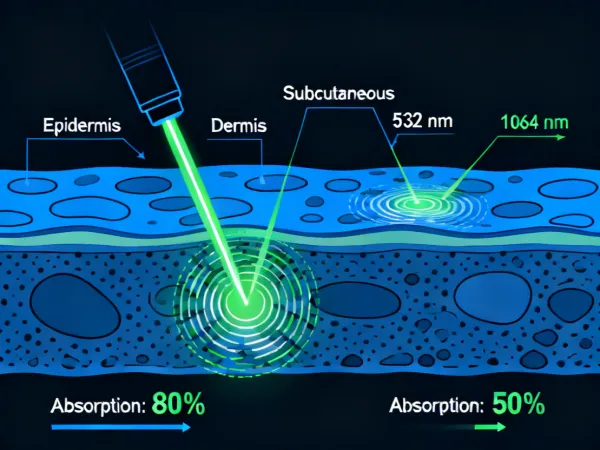
Fotona laser systems combine two complementary wavelengths selected for their distinct chromophore absorption characteristics:

Er:YAG — 2940nm

Peak absorption in water. The Er:YAG wavelength is absorbed approximately 15,000 times more efficiently by water than Nd:YAG, enabling precise ablation of hydrated tissue with minimal collateral thermal damage. The penetration depth in soft tissue is approximately 1µm per pulse at standard fluence.

Nd:YAG — 1064nm

Deep tissue penetration. The Nd:YAG wavelength penetrates 4-6mm into tissue, targeting hemoglobin and deep dermal structures. This enables vascular lesion treatment, deep tissue coagulation, and bulk thermal effects for collagen remodeling without surface disruption.

Er:YAG and Nd:YAG wavelength absorption characteristics
Clinical Considerations

What the Evidence Shows — and What It Does Not

Transparent reporting of both treatment capabilities and limitations is fundamental to evidence-based medical device communication.

What Published Data Supports

  • Measurable collagen density increase following Er:YAG thermal protocols (ultrasound biomicroscopy)
  • Statistically significant reduction in ICIQ-SF scores for stress urinary incontinence at 12 and 24 months
  • Bacterial reduction rates comparable to or exceeding NaOCl irrigation in root canal treatment
  • Reduced requirement for local anesthesia in Er:YAG cavity preparation (patient-reported outcomes)
  • Polysomnographic evidence of AHI reduction in mild-to-moderate sleep apnea

Known Limitations & Open Questions

  • Long-term efficacy data beyond 24 months is limited for most gynecological protocols
  • Skin type VI (Fitzpatrick) representation in aesthetic resurfacing studies remains insufficient
  • Comparative studies against competing laser platforms are not yet available for all indications
  • Results vary significantly by operator experience level; minimum training requirements apply
  • NightLase efficacy in severe obstructive sleep apnea (AHI > 30) has not been adequately demonstrated

Access Clinical Data for Your Specialty

Our medical affairs team can provide specialty-specific bibliographies, protocol documentation, and outcome data packages.